Edited by Mikkel Hyldebrandt
Photos: Apple Music, @badbunnypr, Eric Rojas
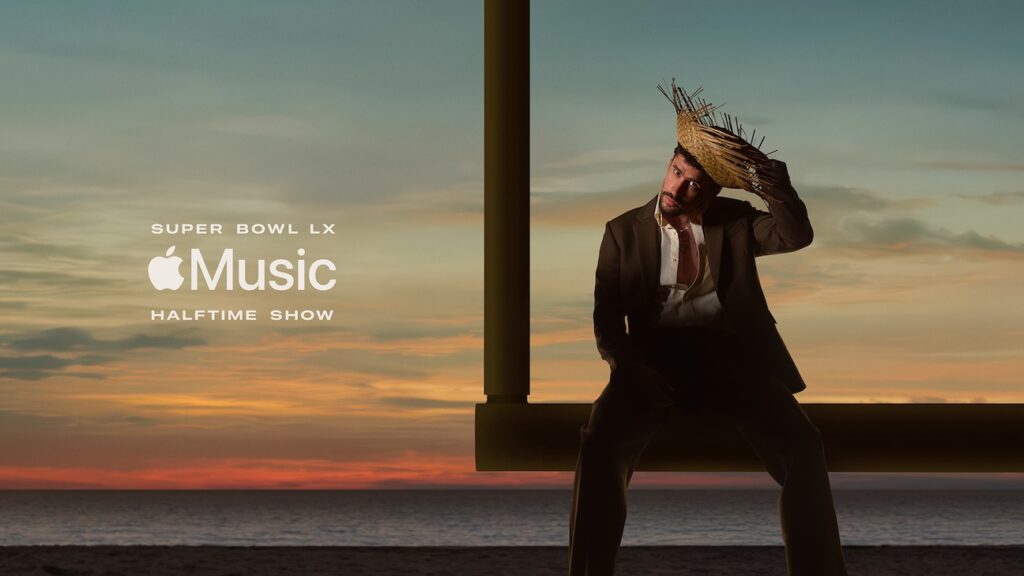
There are moments in pop culture that feel bigger than entertainment – moments that quietly signal a shift in who gets to be seen, celebrated, and centered. Bad Bunny headlining the Super Bowl halftime show is one of those moments. Not because he’s the first Latin artist to command that stage, and not because he checks a particular identity box, but because of how he occupies space—and who he makes room for while doing it.
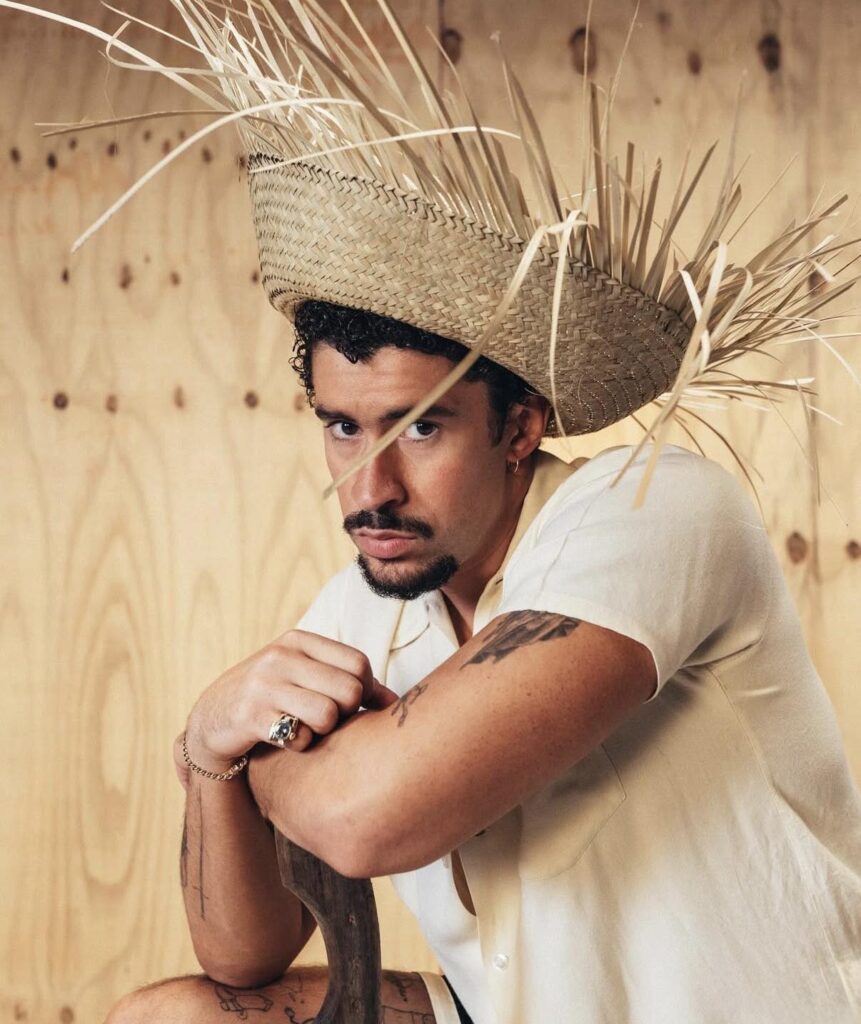
For the LGBTQ+ community, representation has often been framed narrowly: visibility must come from artists who are openly queer, whose identities mirror our own. That representation matters deeply and always will. But Bad Bunny’s presence complicates – and expands – that narrative in powerful ways. He is not a gay artist, yet his career has been marked by radical sexual freedom, playful gender expression, and unapologetic allyship. In a culture still obsessed with labels and binaries, his visibility says something profound: queerness is not only about who you love, but about how you refuse to be constrained.
Bad Bunny has consistently challenged rigid ideas of masculinity in a genre that has historically policed it. He paints his nails, wears skirts, embraces softness, and expresses vulnerability without apology. He does so not as a provocation, but as an extension of self. That matters. For queer people – especially queer youth and queer people of color – seeing a global superstar reject hypermasculine expectations without having to explain himself is affirming in ways that statistics and slogans can’t capture.
The Super Bowl halftime show is one of the most watched cultural events in the world. It is corporate, mainstream, and often conservative in its choices. To place an artist like Bad Bunny at its center is to normalize a kind of freedom that queer people have long been told is risky, niche, or inappropriate for mass consumption. His presence doesn’t ask permission. It simply exists—and in doing so, it shifts the baseline of what audiences accept as “normal.”
For LGBTQ+ audiences, that normalization is quietly radical. It means our aesthetics, our values, and our fluidity no longer have to live solely on the margins or within explicitly queer spaces to be valid. When Bad Bunny stands on that stage, adorned in fashion that blurs gender lines and lyrics that celebrate pleasure and autonomy, he brings a version of queerness into living rooms that may never tune into a drag show or Pride parade. And he does it without spectacle or explanation.
There’s also power in his allyship being active rather than performative. Bad Bunny has spoken out against homophobia and transphobia, paid tribute to victims of anti-trans violence, and consistently aligned himself with LGBTQ+ causes – especially within Latinx communities, where machismo culture has often made queerness more dangerous. His allyship isn’t abstract; it’s visible, embodied, and sustained.
That matters in a political and cultural moment where LGBTQ+ lives – particularly trans lives – are increasingly under attack. To see a non-gay artist use his platform not to distance himself from queerness, but to stand adjacent to it, sends a message that solidarity doesn’t require sameness. It requires courage.
At David Magazine, we understand that queer culture has always been shaped not just by who we are, but by who shows up for us. Bad Bunny’s Super Bowl moment isn’t about claiming queer identity – it’s about expanding cultural permission. Permission for men to be soft. Permission for Latin artists to lead without translation. Permission for sexuality to be expressive without being exploitative. Permission for queerness to exist without justification.
In a world obsessed with categorization, Bad Bunny reminds us that liberation is often found in refusal. Refusal to conform. Refusal to explain. Refusal to choose between strength and sensitivity. His halftime show isn’t just a performance – it’s a signal. And for queer audiences watching, that signal is clear: visibility doesn’t always arrive wearing our exact reflection. Sometimes it arrives wearing a skirt, painted nails, and a global spotlight – and changes the culture anyway.