
Edited by Mikkel Hyldebrandt
Every June, headlines inevitably ask whether Pride has become too commercial, too political, too big, or too visible. Yet anyone who has stood shoulder-to-shoulder with thousands of queer people in a city square, danced beneath a rainbow flag in a foreign country, or marched through streets where LGBTQ+ rights are still being debated knows the truth: Pride remains one of the most powerful acts of community the world has ever created.
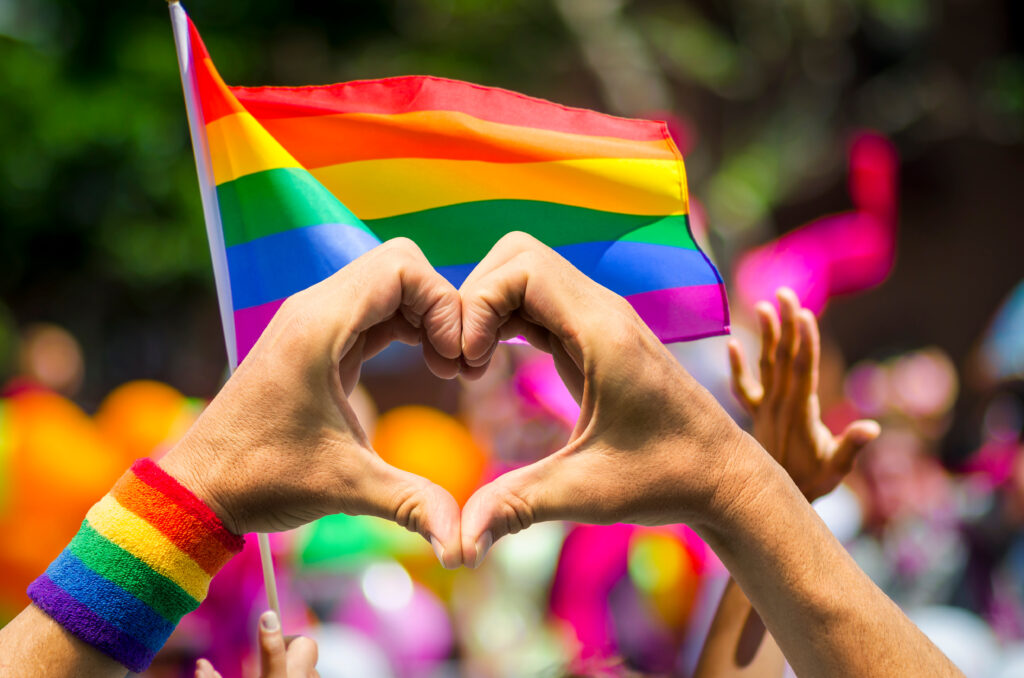
And in 2026, that feels more important than ever.
From New York to Copenhagen, Amsterdam to Atlanta, queer communities continue to gather, celebrate, protest, dance, flirt, remember, and resist. While anti-LGBTQ+ rhetoric and legislation continue to emerge in many parts of the world, Pride festivals remain a vivid reminder that visibility is not a trend—it is a declaration.
For seasoned Pride travelers, every celebration has its own personality, its own traditions, and its own place in our collective story.
New York Pride: Where Modern Pride Began
No global Pride conversation starts anywhere other than New York.
New York Pride reaches its crescendo on June 28, 2026, when the Pride March once again traces a route through the city where the modern LGBTQ+ liberation movement was born. More than half a century after Stonewall, the march remains both a celebration and a declaration.
Veteran Pride-goers know that New York isn’t simply about the parade. It’s about feeling the weight of history while witnessing the next generation of activists, performers, and community leaders carrying the movement forward. Every rainbow flag flying through Greenwich Village feels connected to those who fought before us.
Amsterdam WorldPride: A Celebration on the Water
Few Pride celebrations are as uniquely beautiful as Amsterdam’s.
Hosting its first-ever WorldPride from July 25 through August 8, 2026, Amsterdam will become the epicenter of global LGBTQ+ celebration. The city will mark several major milestones, including 25 years of marriage equality in the Netherlands and 30 years of Pride Amsterdam, while welcoming visitors from around the world for two weeks of activism, culture, nightlife, and community. The iconic Canal Parade takes place on August 1, while the WorldPride March closes the celebration on August 8.
For travelers who have experienced dozens of Prides, Amsterdam offers something increasingly rare: a celebration that feels both world-class and remarkably intimate. The city’s longstanding commitment to LGBTQ+ equality creates an atmosphere where Pride is woven naturally into everyday life.
Atlanta Pride: The South’s Defiant Celebration
Atlanta Pride occupies a special place in the global Pride landscape.
As one of the largest Pride celebrations in the American South, Atlanta represents something bigger than a weekend festival. It stands as proof that queer joy thrives everywhere—even in regions frequently portrayed as politically hostile to LGBTQ+ communities.
Held each October around Coming Out Day (Oct 11), Atlanta Pride has become a gathering point for LGBTQ+ people across the Southeast. The energy is distinctly Southern: welcoming, diverse, community-driven, and unapologetically celebratory.
What continues to make Atlanta exceptional is its intersectionality. Black queer culture, Southern queer history, trans leadership, and grassroots activism all share the spotlight. The result is a Pride that feels less like an event and more like a family reunion stretching across generations.
Copenhagen Pride: Nordic Visibility at Its Best
If you’ve never experienced Copenhagen Pride, you’re missing one of Europe’s most rewarding celebrations.
Copenhagen Pride celebrates its 30th anniversary in 2026, with Pride Week starting August 8 and culminating in the city’s colorful parade on August 15. While Pride Month may belong to June elsewhere, Denmark’s capital has long claimed August as its rainbow season, transforming City Hall Square into one of Europe’s most welcoming queer gathering places.
The Danish capital approaches Pride with the same values that define much of Scandinavian culture: inclusion, accessibility, sustainability, and community. The festival’s centerpiece, City Hall Square, becomes a vibrant gathering space filled with performances, discussions, and cultural programming.
Unlike some larger festivals where visitors can feel lost in the crowd, Copenhagen manages to create a strong sense of connection. The city’s bike-friendly streets, waterfront atmosphere, and progressive culture make it easy to understand why so many international visitors return year after year.
For many LGBTQ+ travelers, Copenhagen represents a glimpse of what a truly inclusive society can look like.
Sydney, São Paulo, Madrid, and Beyond
Of course, no global Pride guide would be complete without acknowledging some of the world’s other iconic celebrations.
Sydney Gay and Lesbian Mardi Gras (May 29 – June 1) remains one of the most spectacular LGBTQ+ events on Earth. Equal parts political demonstration and theatrical spectacle, Mardi Gras has evolved into a cultural institution that attracts visitors from every continent.
São Paulo Pride (June 3-7) routinely hosts one of the largest Pride parades in the world. The scale is difficult to comprehend until you’re standing amid a sea of millions celebrating queer visibility in the heart of Brazil.
Meanwhile, Madrid Pride (June 25 – July 5) has become Europe’s summer crown jewel. The Spanish capital combines massive street parties, cultural programming, and political activism with a uniquely Mediterranean sense of joy. Entire neighborhoods transform into outdoor celebrations that continue long after the sun goes down.
You’ll also find extraordinary Pride celebrations in cities such as Cape Town, Mexico City, Taipei, Auckland, Berlin, and London—each reflecting local cultures while contributing to a shared global movement.
One Community, Countless Celebrations
The beauty of Pride travel isn’t simply collecting destinations. It’s discovering how different communities express the same fundamental truth.
Whether you’re dancing on a canal boat in Amsterdam, marching through Manhattan, celebrating under the Georgia sun in Atlanta, or joining thousands in Copenhagen’s city center, you’re participating in something much larger than a festival. You’re joining a global community that refuses to disappear.
At a time when some voices seek to limit LGBTQ+ visibility, Pride’s worldwide growth feels like its own answer. Every parade route, every rainbow crosswalk, every drag performance, every community stage, and every first-time attendee sends the same message:
We’re still here. And judging by the growing calendar of Pride celebrations around the world, we’re not going anywhere.