
By Tristan Lane

There is a fascinating species that inhabits nearly every gym in America. They are easy to identify. They travel in packs, wear tank tops seemingly tailored from handkerchiefs, and have established permanent residency around the free-weight area.
I call them the Bench Press Barons.
Now, before the angry Instagram messages begin, let me be clear: this is not an attack on muscular people. As someone who appreciates a well-maintained physique, I fully support anyone’s quest for bigger biceps, broader shoulders, or glutes capable of generating their own gravitational pull.
What I do object to is the growing belief that purchasing a gym membership or paying an HOA fee also entitles one to annex an entire section of the facility.
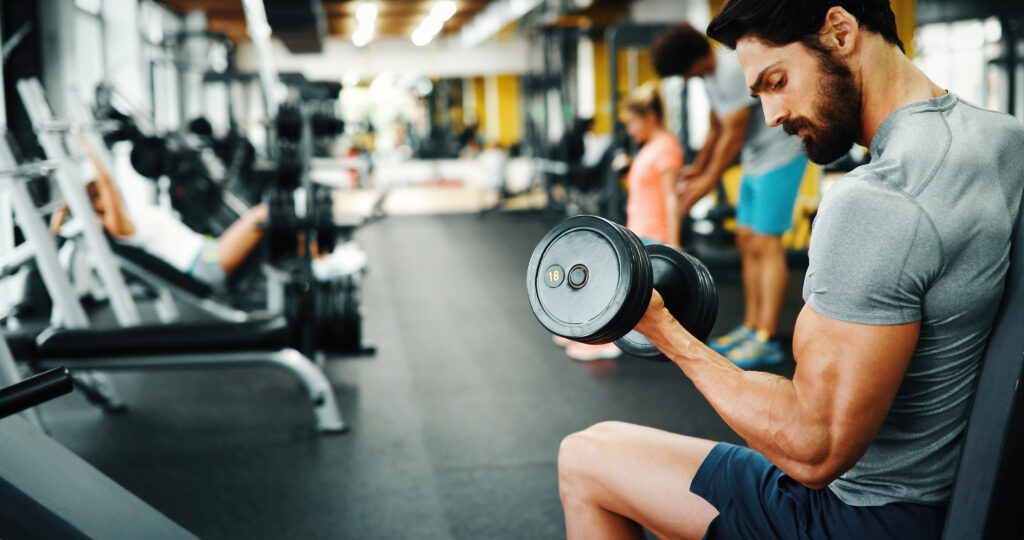
We’ve all seen it. Four friends occupy a single bench for forty-five minutes. One person lifts while the other three discuss weekend plans, scroll social media, and occasionally remember they are in a gym. Around them sits a carefully curated collection of dumbbells ranging from 15 to 80 pounds, creating a no-go zone for everyone else.
Then there is the squat rack.
The squat rack is perhaps the most valuable piece of equipment in the gym. It is designed for squats, deadlifts, presses, and other compound movements. Yet some individuals appear to believe it is a private studio apartment. They set up camp, film content, answer messages, hold conversations, and somehow stretch a thirty-minute workout into a ninety-minute occupation.
Spending more than an hour on a squat rack during peak gym hours is not a sign of elite training. More often, it sends a different signal entirely: that you are blissfully unaware that other people exist.
Strong gym etiquette is not complicated. Complete your sets, rest appropriately, let others work in when possible, and move on. The most experienced lifters understand this. They know that strength is demonstrated by performance, not by monopolizing equipment.
The irony is that many of the strongest people in the gym are often the most courteous. They understand that everyone is there for the same reason: to improve themselves. They happily let others work in between sets and seem genuinely aware that the gym contains more than their immediate square footage.
The problem lies not with strength but with entitlement.
A gym is one of the few places where people of every background, income level, age, and identity come together with a shared purpose. That social contract depends on mutual respect.
So the next time you find yourself guarding a squat rack like a medieval lord defending a castle, remember that you do not own the equipment. The gym is a shared space, not your personal kingdom.
Because nothing says “gym rookie” quite like treating a squat rack as if your name is engraved on it.